
The Math Behind Emergency Funds (And Why Not Having One Gets Expensive Fast)
“Build an emergency fund.”
You’ll hear recommendations like:
- Save 3–6 months of expenses
- Keep money in a high-yield savings account
- Only use it for real emergencies
But many people skip this step.
Not because they don’t understand it — but because it feels slow and boring compared to investing or paying off debt.
Here’s the problem:
When an emergency happens and you don’t have savings, the cost usually shows up somewhere else — often in high-interest debt.
And the math behind that decision can quietly cost thousands of dollars.
Let’s break down the numbers.
The Real Cost of No Emergency Fund
Imagine a fairly common emergency:
Your car suddenly needs a $2,000 repair.
If you have an emergency fund, you simply pay the bill.
If you don’t, the most common fallback is a credit card.
Here’s what happens.
Scenario: $2,000 Emergency on a Credit Card
| Expense | Amount |
|---|---|
| Emergency expense | $2,000 |
| Credit card interest rate | 22% |
| Monthly payment | $100 |
| Time to pay off | ~24 months |
| Total interest paid | ~$520 |
That $2,000 emergency becomes $2,520.
And this assumes you never miss a payment.
Many people carry balances longer, which means the interest cost grows even higher.
Now Compare That to an Emergency Fund
If you had a $2,000 emergency fund, the math would look like this:
| Expense | Amount |
|---|---|
| Emergency repair | $2,000 |
| Interest paid | $0 |
| Time to recover | Rebuild savings |
Same emergency.
$520 cheaper.
That’s the hidden math behind emergency funds.
Why This Happens
Emergency funds work because they eliminate the interest penalty of unexpected expenses.
Without savings, most people rely on one of these options:
1. Credit Cards
Average credit card rates are often 18–25%.
This turns small emergencies into long-term debt.
2. Personal Loans
These often carry 10–30% interest rates, depending on credit.
3. Payday Loans
Some payday loans effectively charge 300–400% annual interest.
A $500 emergency can spiral quickly.
The Real Issue: Emergencies Are Predictable
Individually, emergencies feel random.
But over time, they are almost guaranteed.
Common financial emergencies include:
- Car repairs
- Medical bills
- Job loss
- Home repairs
- Travel for family emergencies
- Pet emergencies
The exact event is unpredictable.
But the probability of something happening is extremely high.
This is why emergency funds are one of the most powerful financial buffers.
The Math Behind the 3–6 Month Emergency Fund Rule
Financial advisors often recommend saving 3–6 months of expenses.
But where does that number come from?
It’s based primarily on job loss risk.
Let’s look at a simplified example.
Monthly Budget Example
| Expense | Monthly Cost |
|---|---|
| Rent | $1,500 |
| Food | $500 |
| Utilities | $200 |
| Insurance | $300 |
| Transportation | $300 |
| Miscellaneous | $200 |
Total monthly expenses:
$3,000
Recommended Emergency Fund
| Months Covered | Savings Needed |
|---|---|
| 3 months | $9,000 |
| 6 months | $18,000 |
This amount gives you time to:
- Find a new job
- Cover unexpected costs
- Avoid going into debt
Why Not Just 1 Month?
Because many emergencies last longer.
Job searches alone often take several months.
Without a buffer, people often rely on debt during unemployment — which can create long-term financial damage.
Real Life Example
Let’s compare two people with identical incomes.
Sarah: Has an Emergency Fund
Savings: $12,000
Unexpected event:
Her HVAC system breaks.
Cost: $5,000
What happens:
- Pays from emergency fund
- Rebuilds savings over 12 months
- No debt
Financial outcome:
| Item | Amount |
|---|---|
| Emergency cost | $5,000 |
| Interest paid | $0 |
| Total cost | $5,000 |
Jake: No Emergency Fund
Savings: $0
Same HVAC failure.
Cost: $5,000
He uses a credit card.
Interest rate: 22%
Monthly payment: $200
| Item | Amount |
|---|---|
| Emergency cost | $5,000 |
| Interest paid | ~$1,300 |
| Total cost | ~$6,300 |
Same problem.
But Jake pays $1,300 extra just because he didn’t have savings.
This is the true cost of being unprepared.
The Hidden Psychological Benefit of Emergency Funds
Emergency funds don’t just protect your finances.
They protect your decision-making.
When people lack savings, they often make decisions based on urgency instead of strategy.
Examples include:
- Accepting the first job offer instead of the right job
- Selling investments at the worst time
- Putting medical bills on credit
- Delaying necessary repairs
Savings gives you time to think.
And time is one of the most valuable financial resources.
What People Can Do Instead
If saving 6 months of expenses feels overwhelming, start smaller.
Most people build emergency funds in stages.
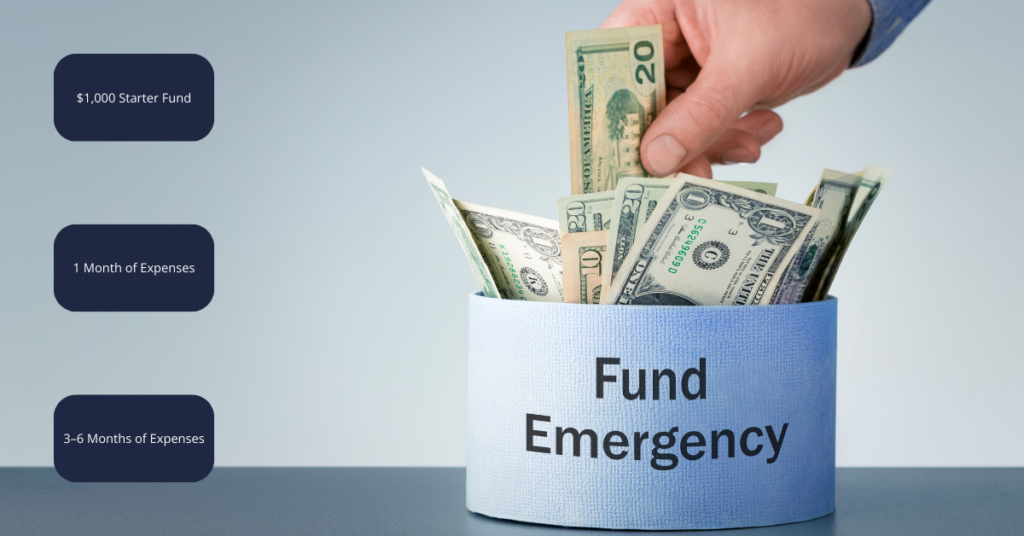
Stage 1: $1,000 Starter Fund
This covers smaller emergencies like:
- Car repairs
- Minor medical bills
- Unexpected travel
Goal: $1,000
Stage 2: 1 Month of Expenses
Next milestone:
Cover one full month of living expenses.
This protects against short-term income disruptions.
Stage 3: 3–6 Months of Expenses
The final goal:
Full emergency protection.
How much you need depends on factors like:
- Job stability
- Income variability
- Household dependents
- Insurance coverage
Where to Keep an Emergency Fund
Emergency funds should be:
- Liquid
- Safe
- Accessible
Good options include:
- High-yield savings accounts
- Money market accounts
- Treasury bills
Avoid investing emergency funds in stocks.
Market volatility can make your savings unavailable exactly when you need them.
Simple Emergency Fund Saving Strategy
One of the easiest methods is automatic savings.
Example:
Monthly income: $5,000
Save 10% automatically.
| Month | Savings Total |
|---|---|
| Month 1 | $500 |
| Month 6 | $3,000 |
| Month 12 | $6,000 |
| Month 24 | $12,000 |
Without changing lifestyle drastically, the fund builds steadily.
Automation removes the temptation to spend the money elsewhere.
The Opportunity Cost Question
Some people ask:
“Shouldn’t I invest instead of holding cash?”
Investing often produces higher returns.
But emergency funds serve a different purpose.
They provide risk protection, not growth.
Think of them as financial insurance.
The goal is stability—not maximum return.
Key Takeaways
• An emergency fund prevents unexpected expenses from turning into high-interest debt.
• A $2,000 emergency can cost over $500 extra if financed with credit cards.
• The common recommendation of 3–6 months of expenses protects against job loss and large unexpected costs.
• Emergency funds provide psychological benefits by allowing better financial decisions during stressful situations.
• Start small if necessary—even $1,000 can prevent many common financial crises.
• Emergency savings should be kept in safe, liquid accounts, not invested in volatile assets.